
*Oyetola Says FG Targets Globally Competitive Ports
*Modernization Project Must Be Wholelistics – Enisuoh
Stakeholders in the maritime sector of the economy have pointed the way forward in the Federal Government’s quest to modernize the nation’s seaports and ensure their competitiveness in the West and Central Africa Sub-regions.
They opined that Nigeria’s ambition to emerge as the leading maritime and trade gateway in West and Central Africa Sub-regions can only be achieved through what they called “an end-to-end modernization of its ports”, especially infrastructure, digitalization, regulation, security and efficient connections to the hinterland through an effective railway system.
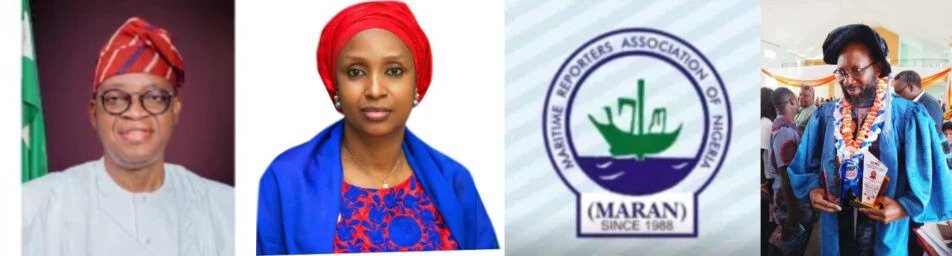
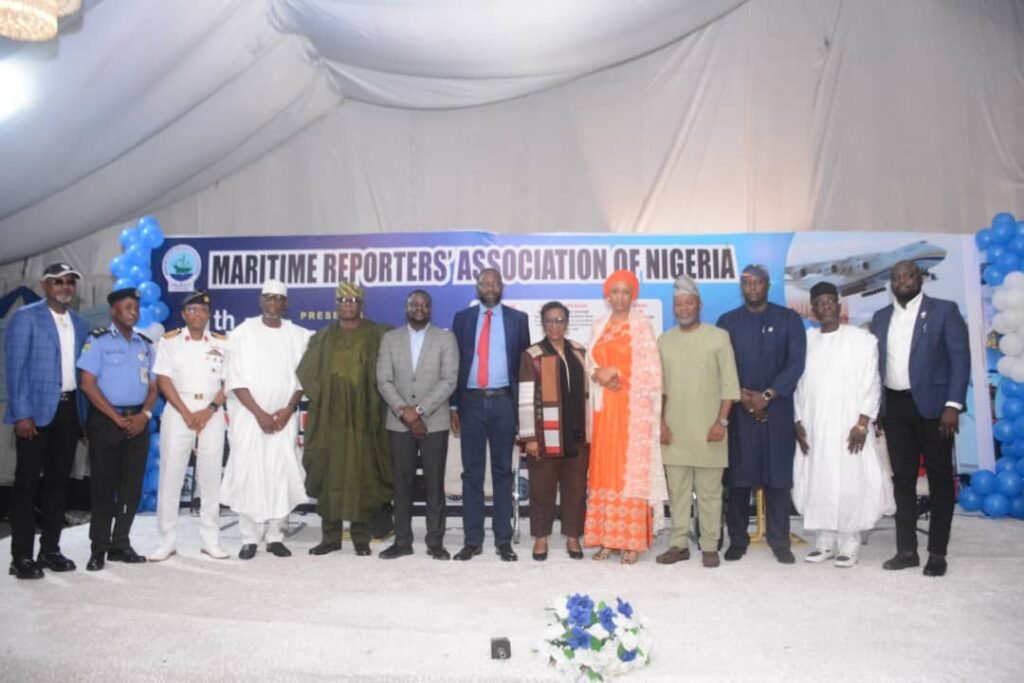
The stakeholders stated this Thursday at the 2026 edition of Maritime Reporters Association of Nigeria (MARAN) annual maritime lecture (MAMAL) in Lagos.
They spoke against the backdrop of growing concerns over port costs, congestion, cargo evacuation and the competitiveness of the nation’s seaports.
Delivering the keynote address, the erstwhile Managing Director of the Nigerian Ports Authority (NPA), Ms. Hadiza Bala Usman said port modernisation must be measured by tangible improvements in cargo movement, turnaround times, logistics costs and export capacity rather than the volume of money spent on infrastructure.
Usman who is presently the Special Adviser to President Bola Ahmed Tinubu on Policy Coordination and Head, Central Delivery Coordination Unit identified six critical dimensions of port modernization.
These include infrastructure and operational models, modern equipment, digitalization, institutional reform, human capital development and commercial modernization involving tariffs, concessions, investment and service quality.
The former NPA Chief Executive Officer (CEO) disclosed that Nigeria’s seaports handle more than four-fifths of the country’s physical imports and exports, making their efficiency critical to the wider economy.
Her words: “When port costs are high, they travel into the price of rice on the trader’s stall, the landed cost of raw materials for the manufacturer and into the exchange-rate pressure created when importers pay dollar-denominated charges on top of naira-denominated uncertainties.”
Usman hailed the recent performance of Nigerian ports, noting that the World Bank and S&P Global Market Intelligence’s Container Port Performance Index showed that Tin Can Island Port ranked 10th globally while the Lagos Port Complex, Apapa, ranked 12th among the world’s most improved container ports between 2020 and 2025.
She also cited increased cargo throughput, digitalization initiatives and ongoing rehabilitation of major port infrastructure as evidence that reforms were beginning to yield results just as she warned that the progress must be consolidated through sustained investments and measurable performance.
According to her, the reconstruction of Apapa and Tin Can Island ports, rehabilitation of eastern ports, expansion of Lekki deep seaport and development of other facilities would only deliver their full economic value if supported by what she called “efficient road, rail, barge, inland logistics and dry-port connections”.
Usman argued that a port cannot be globally competitive if its hinterland is not competitive just as she pointed out that high port charges threaten competitiveness.
She also called for a comprehensive review of Nigeria’s port tariff structure, arguing that the focus should shift from individual charges to the total cost of moving cargo through the Nigerian supply chain.
According to her, reports of the cost of clearing a standard 20-foot container through Apapa reaching about N14 million to N15 million, compared with lower costs at some competing West African ports, should concern policymakers. The total cost comprises several different charges, including statutory port tariffs, terminal handling charges, shipping-line charges, detention, demurrage, haulage, documentation and clearing costs. Eliminating duplicated and obsolete charges and regulatory interventions would significantly reduce the cost of doing business at Nigerian ports.
Continuing, the erstwhile NPA CEO said: “Charges cannot remain frozen indefinitely while infrastructure deteriorates, but neither can users be required to pay any amount demanded. Tariffs must be linked to value and performance. We need a predictable, transparent and performance-based tariff regime, with tariff adjustments supported by published methodologies, international benchmarks and measurable improvements in service delivery.”
Usman also advocated the publication of an annual Port Economic Performance Report covering vessel and truck turnaround times, cargo-handling productivity, equipment availability, customs clearance, total logistics costs, digital transactions, export connectivity, customer satisfaction and dispute-resolution timelines.
On his part, the Minister of Marine and Blue Economy, Alhaji Adegboyega Oyetola, said the Federal Government was pursuing an ambitious programme aimed at transforming Nigeria’s maritime infrastructure and positioning the country as a maritime hub for West and Central Africa.
Oyetola who was represented at the event by NPA, General Manager, Corporate and Strategic Communications, Mr. Seyi Iyawe stated that the administration had secured approval for comprehensive modernisation of Apapa, Tin Can Island and other ports.
Describing the intervention as a structural renewal rather than cosmetic rehabilitation, the Minister said the programme would involve the rebuilding of key infrastructure, deeper channels capable of accommodating larger vessels, replacement of obsolete equipment and an overhaul of port operations.
Said he: “Our objective is to create ports that can move cargo, accommodate larger vessels, reduce turnaround time and lower the cost per unit of cargo handled.”
Oyetola also highlighted the government’s efforts to expand Nigeria’s deep-sea port capacity, saying the country could no longer depend exclusively on traditional ports.
He pointed out that deep-sea ports would help de-centralize cargo flows, reduce pressure on existing facilities, open new economic corridors and create opportunities for investment, employment and industrial development.
He further cited investments in modern marine crafts, including tugboats, mooring boats and pilot boats, as part of measures to improve vessel movement, safety and operational efficiency.
According to Oyetola, Nigeria’s improved maritime security record was another major component of the government’s competitiveness strategy. Nigeria has maintained a zero-piracy record in its territorial waters for four consecutive years, while strengthened security and compliance measures had also restored international confidence in Nigerian ports.
H averred that the establishment of the Nigerian Ports Economic Regulatory Agency (NPERA represented a major institutional reform designed to strengthen economic regulation in the sector.
He said the new regulator would be empowered to enforce service standards, monitor tariffs, promote fair competition, address anti-competitive practices and protect port users from arbitrary and unpredictable charges.
“The more competitive our ports become, the greater the volume of legitimate trade they will attract. The more efficient our ports become, the more attractive Nigeria becomes to investors,” he said.
He added that the government’s philosophy was to move the maritime sector “from a culture of collecting charges to a culture of creating value.”
He expressed optimism that the Federal Government would continue to pursue port modernisation, stronger regulation, improved maritime security, deep-sea port development, digitalisation and efficiency in order to make Nigeria’s maritime sector investment-friendly and globally competitive.
Also speaking, Executive Director, Operations and Technical, Tantita Security Services Nigeria Limited (TSSNL), Captain Warredi Enisuoh, warned that efforts to modernize Nigerian ports would have limited impact unless equal attention was paid to what happens outside the port gates.
He stressed the need for the Federal Government to adopt a broader approach to port modernization that incorporates cargo evacuation, road infrastructure, rail, inland waterways, truck management and the reduction of multiple checkpoints and collection points in the cargo supply chain.
According to Enisuoh who was a former Deputy Director, Nigerian Maritime Administration and Safety Agency (NIMASA), you cannot modernize a port without modernizing your exit points. Automating operations inside Apapa or Tin Can Island would not eliminate congestion if cargo evacuation remained inefficient.
Enisuoh revealed that the Port of Lomé in the Republic of Togo was an example of how strategic investment in deeper channels and streamlined processes could enhance a port’s competitiveness.
He noted that the growth in vessel sizes globally made deeper ports increasingly important, observing that some modern container ships now have capacities of more than 20,000 TEUs, far beyond the capacity of many traditional ports and anchorages in the region.
He argued that Nigeria must urgently deepen and expand its port infrastructure to accommodate larger vessels and compete effectively with neighbouring maritime gateways.
The TSSNL Executive Director picked holes in the multiplicity of agencies and processes confronting shipping agents and port users in the country.
He pointed out that operators are often required to interface separately with agencies including the NPA, NIMASA and Nigeria Customs Service (NCS) resulting in delays and additional costs.
Enisuoh called for a genuine one-stop-shop system in which port users could complete multiple regulatory and payment requirements through an integrated platform 3ven as he enjoined the Federal Government to develop Nigeria’s numerous ports as part of a coordinated national maritime strategy rather than concentrating virtually all major port activities in Lagos.
According to him, the country must develop viable alternatives in other parts of the coastline to distribute cargo, reduce pressure on Lagos and create more efficient trade corridors into the hinterland. Congestion and poor road infrastructure in Lagos could undermine even the most sophisticated investment in port infrastructure. If city infrastructure is poor, spend all the millions of dollars you want to maintain the port. It’s not going to work. You will still get congestion.
He called for a holistic national plan integrating ports, roads, bridges, rail, inland waterways, logistics hubs and cargo evacuation systems.
In all, the stakeholders seek coordinated reform as there was unanimity that Nigeria’s port competitiveness could not be achieved through infrastructure investments alone.
While Usman emphasised predictable tariffs, transparency, institutional coordination and performance measurement, Oyetola highlighted the Federal Government’s investments in infrastructure, security, deep-sea ports, marine assets and economic regulation.
Enisuoh, on the other hand, stressed the need to modernise the entire logistics chain beyond the port gates and develop alternative maritime gateways across the country.
According to Usman, the ultimate objective should be to reduce the total cost and time required to move cargo from ship to factory and from Nigerian producers to international markets.
She enjoined maritime journalists to play a stronger accountability role by tracking port performance, investigating the real cost of cargo movement and benchmarking Nigerian ports against competing African gateways.
“Behind every statistic is a business, behind every delay is a cost, and behind every efficiency gain is an opportunity for national growth,” she said.
The stakeholders maintained that if infrastructure, technology, regulation, security, tariffs and hinterland connectivity could be made to work as one integrated system, Nigerian ports would be better positioned to attract regional and international cargo, support manufacturing and exports, create employment and strengthen the country’s position in the global trading system.