
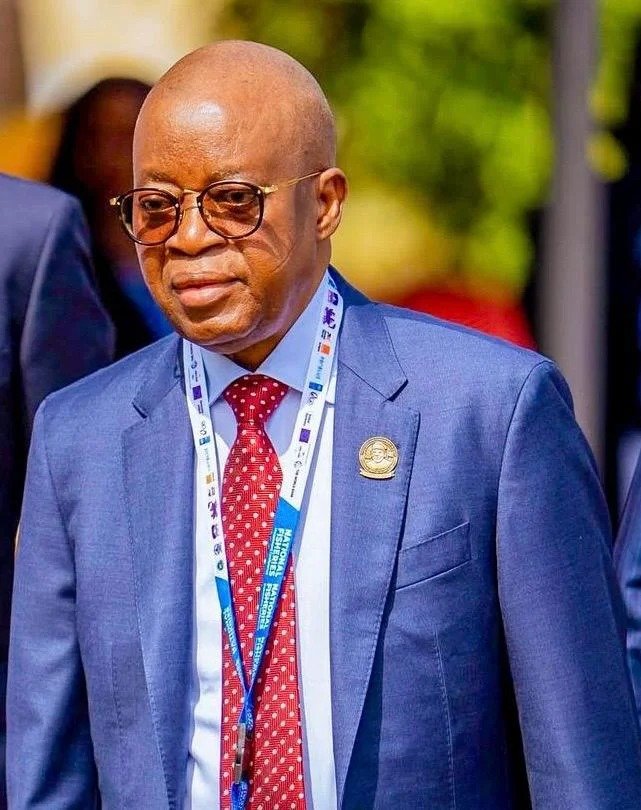
Not less than N1.8 trillion has been generated as revenue into the federal till in 2025 by maritime agencies, the Minister of Marine and Blue Economy, Dr. Adegboyega Oyetola has said.
These maritime agencies include the Nigerian Ports Authority (NPA), Nigerian Shippers Council (NSC), Nigerian Maritime Administration and Safety Agency (NIMASA), and the National Inland Waterways Authority (NIWA).
Oyetola also revealed that Nigeria has recorded zero piracy for four consecutive years within her territorial waters.
He attributed the feats to the strict implementation of the country’s anti-piracy initiative, the integrated national security and waterways protection infrastructure also known as the Deep Blue Project.
Delivering a keynote address in Abuja at the just concluded 18th International Maritime Seminar for Judges organised by NSC in conjunction with the National Judicial Institute (NJI), Oyetola also disclosed that domestic fish production has risen from approximately 1.1 million metric tons to over 1.4 million metric tons.
Citing new dynamics in the global maritime industry, Oyetola enjoined the judiciary to prepare for a new generation of maritime disputes, especially those arising from autonomous ships, digital shipping and the global transition to cleaner maritime transport.
His words: “The rapid evolution of maritime technology was creating unprecedented legal questions around liability, navigational responsibility, insurance, collision regulations and the allocation of responsibility when autonomous vessels or their systems fail.
“The digitalisation of shipping through electronic bills of lading, block chain-enabled cargo documentation and digital freight contracts was transforming global commerce while creating fresh evidentiary, contractual, and jurisdictional issues.
“The prospect of vessels operating with limited or no human crews raises fundamental questions concerning liability, navigational responsibility, insurance, collision regulations, and the allocation of legal responsibility when technology fails.”
Oyetola explained that the growing international focus on maritime de-carbonisation and environmental responsibility would also generate increasingly complex disputes over environmental liability, pollution damage, regulatory enforcement and compliance with evolving international standards, enjoining judges to approach such cases with “sound legal reasoning, scientific understanding, and awareness of emerging international jurisprudence”.
He argued that by strengthening the mechanism for prompt and efficient resolution of shipping disputes through litigation and arbitration, Nigeria can successfully position itself as Africa’s premier maritime hub.
Said he: “Every judgment delivered in a maritime matter sends a powerful message – not only to the litigants before the court but also to international investors, ship owners, financiers, insurers, cargo interests, and seafarers across the world.
“A predictable, well-reasoned, and internationally informed judiciary is itself an instrument of economic competitiveness. It lowers transaction costs, enhances commercial confidence, encourages parties to choose Nigerian courts and Nigerian arbitration centres for the resolution of maritime disputes, and reinforces Nigeria’s reputation as a credible destination for maritime investment.”
“The Federal Government would support the expansion of specialised maritime divisions within the Federal High Court, align domestic legislation with contemporary international maritime conventions and promote robust alternative dispute-resolution mechanisms, particularly maritime arbitration.
“A predictable and internationally informed judiciary could reduce transaction costs, strengthen commercial confidence and encourage parties to choose Nigerian courts and Nigerian arbitration centres for the resolution of maritime disputes.
“Judicial excellence has become a strategic economic asset, and investments in judicial capacity are investments in Nigeria’s future competitiveness within the global maritime economy.”
Oyetola recalled that the Federal Government had secured a £746 million financing agreement with the United Kingdom for the modernisation of the Apapa and Tin Can Island ports, while the approved disbursement of the Cabotage Vessel Financing Fund (CVFF) would enable Nigerian ship owners to acquire vessels, expand their participation in coastal shipping and create an estimated 30,000 jobs.
He also predicted the expansion of offshore renewable energy, aquaculture, seabed resources, coastal tourism and other blue economy sectors would inevitably generate more disputes involving investors, regulators, host communities and commercial operators.
According to the Minister, the marine and blue economy cannot flourish in a legal vacuum. Nigeria required courts with the courage to uphold the rule of law, the wisdom to balance the legitimate interests of commerce with the demands of justice, and the expertise to interpret and apply increasingly sophisticated international maritime legal instruments.
Oyetola stressed that efficient and timely resolution of disputes was essential to maintaining confidence in Nigeria’s maritime sector and enhancing the country’s competitiveness as a regional trade and shipping hub.
The Chairman of the occasion and Secretary to the Government of the Federation (SGF), Senator George Akume, underscored the strategic importance of the maritime sector to Nigeria’s economy and the significance of the seminar in strengthening the legal and institutional framework required for its sustainable development.
He emphasised the need for the speedy dispensation of admiralty justice and the prompt resolution of maritime-related disputes, noting that delays in the administration of justice could have far-reaching consequences for trade, shipping, investment, port operations and the wider economy.
The SGF also cautioned government agencies against operating in silos, stressing that the complex nature of the maritime and blue economy sectors required effective coordination and collaboration among relevant institutions.
He assured participants of the Federal Government’s commitment to strengthening inter-agency cooperation to promote trade, improve port efficiency, streamline maritime operations and support the growth of the sector.