
Nigeria has called on the global maritime community to prioritise fairness, equity, and adequate support for developing economies in the push toward net-zero emissions in international shipping.
The Minister of Marine and Blue Economy, Dr. Adegboyega Oyetola staed Nigeria’s position while speaking at the 84th session of the Marine Environment Protection Committee (MEPC 84) of the International Maritime Organization (IMO) in London, United Kingdom.
He also used the occasion to reaffirm Nigeria’s support for decarbonization just as he averred that such support depends on frameworks that reflect the economic realities of developing nations.
The Special Adviser to the Minister, Dr. Bolaji Akinola in a statement made available to Maritime Bits quoted Oyetola emphasizing that achieving net-zero emissions by 2050 must align with sustainable development goals.
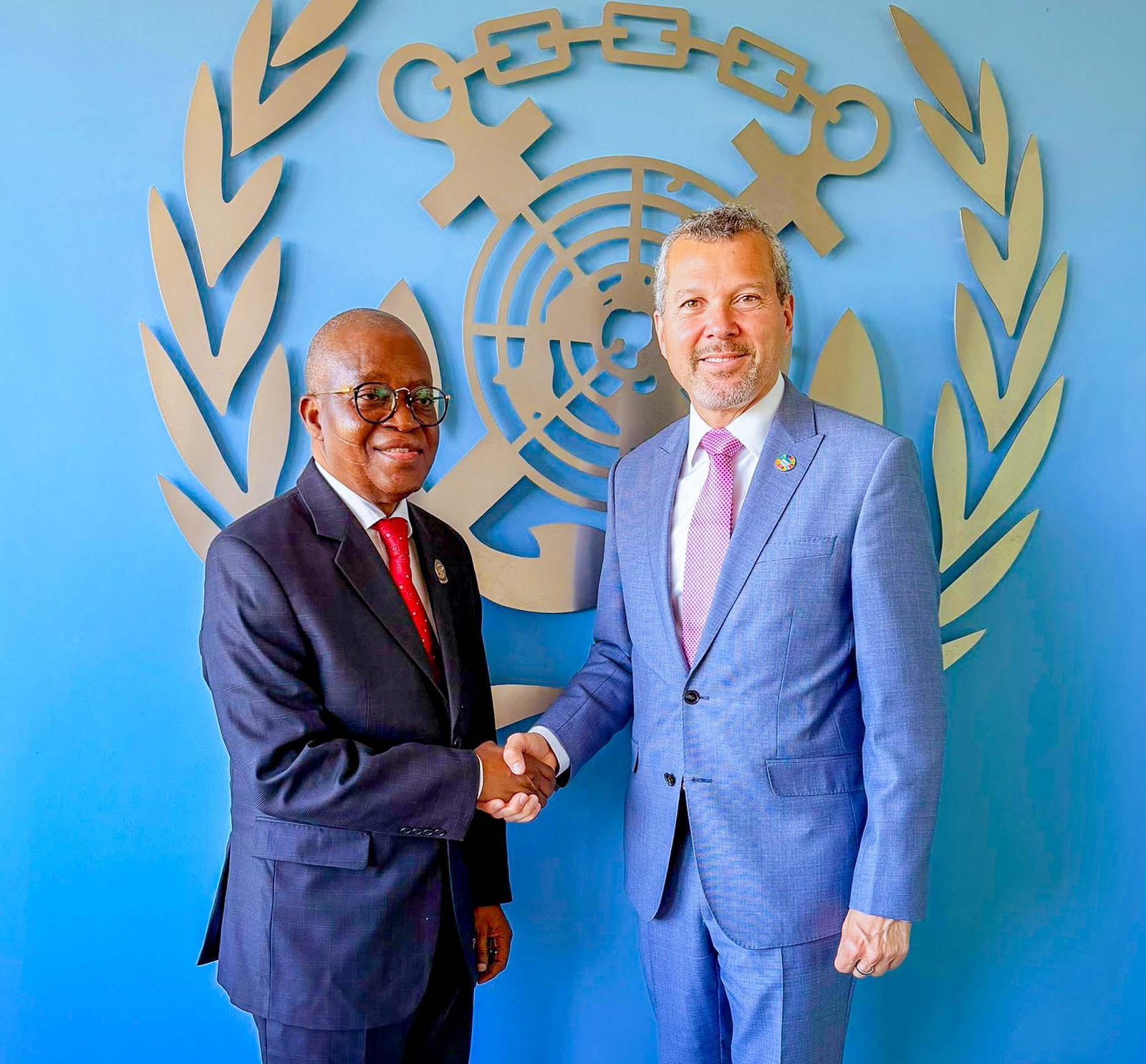
The Minister was also said to have held some strategic meetings on the sidelines of the MEPC 84 where he met with some key stakeholders in the global shipping world.
These include the Secretary-General of the IMO, Mr. Arsenio Dominguez and the President of Saudi Arabia’s Transport General Authority, Mr. Fawaz Al Sehali. According to the statement, during these engagements, he reaffirmed Nigeria’s commitment to deeper collaboration across key maritime priorities. The discussions focused on strengthening cooperation in maritime security, capacity building, blue economy development, and advancing a fair and inclusive energy transition.
He reiterated Nigeria’s commitment to a constructive and mutually beneficial partnership with the IMO, anchored on shared goals such as maritime safety, institutional capacity development, and sustainable blue economy growth.
Dominguez expressed appreciation for the hospitality extended to him during his recent visit to Nigeria, particularly his meeting with President Bola Ahmed Tinubu. He described the engagement as a clear demonstration of Nigeria’s strong commitment to maritime governance.
He also commended Nigeria’s leadership in enhancing maritime security in the Gulf of Guinea, highlighting significant progress in reducing piracy and improving regional coordination. According to him, Nigeria’s experience offers valuable lessons for other regions.
The discussions further covered Nigeria’s expanding role within the IMO Council, ongoing reforms in port modernisation and digitalisation, and efforts to strengthen human capital in line with global maritime standards.
The engagement with Saudi Arabia underscored deepening bilateral relations, with both countries reaffirming their commitment to mutual support within the IMO framework.