
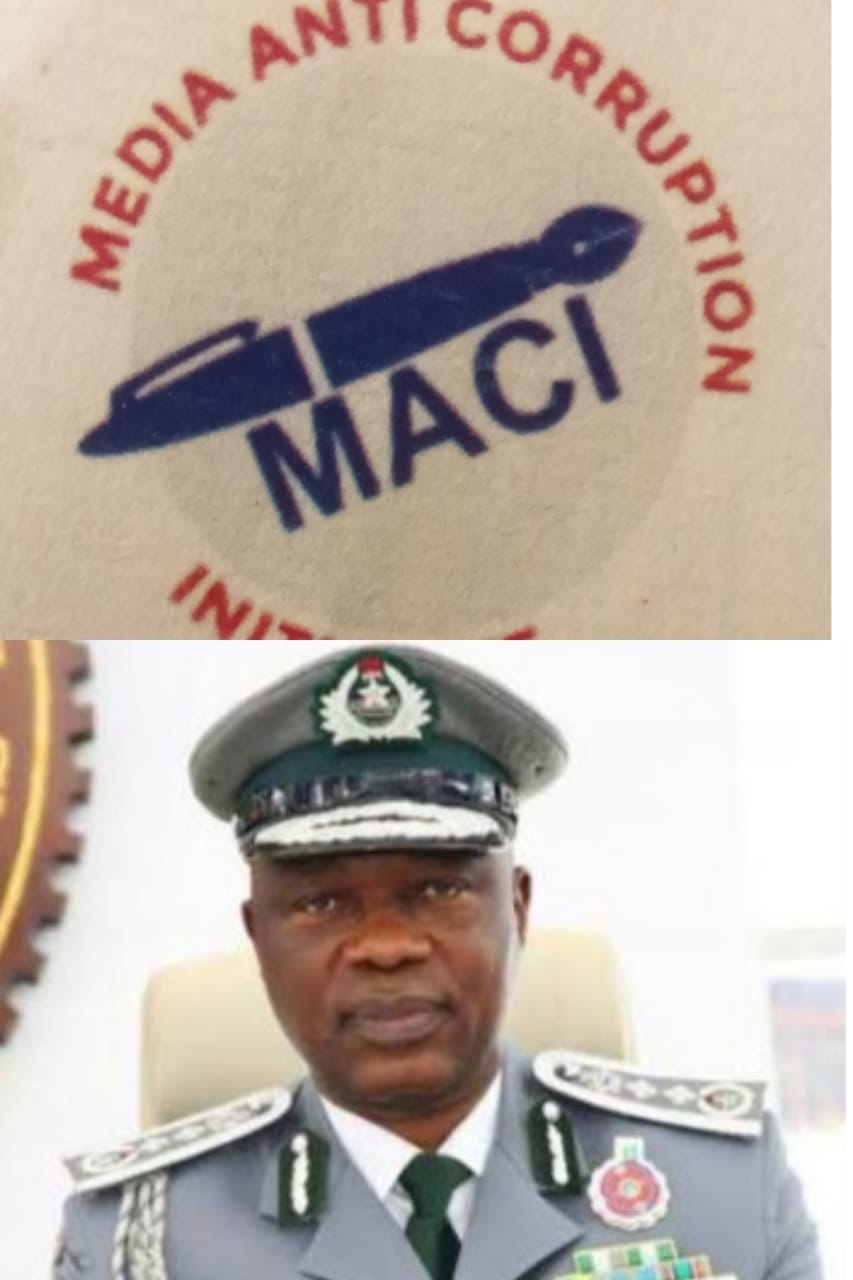
The Media Anti-Corruption Initiative (MACI) has pat the Comptroller-General of Customs (CGC), Dr. Adewale Bashir Adeniyi on the back for the decisive steps he took in the fight against corruption in Nigeria Customs Service (NCS).
MACI in a statement issued in Lagos said the signing of three significant anti-corruption documents such as Standard Operating Procedure (SOP) for Conducting Internal Corruption Risk Analysis and Mapping (ICRAM), ICRAM Handbook, and the Integrity Action Plan by the CGC were commendable.
According to the statement signed by the President of MACI, Mr. Funso Olojo and the Secretary, Mr. Lucky Onyeji, the non-governmental organization (NGO) emphasized that the bold steps aligns with the group mission to discourage public participation in corruption. This initiative marks a pivotal moment in the fight against corruption within NCS.
Maritime Bits checks revealed that the signing ceremony which took place on October 6, 2026 at NCS Headquarters, Maitama, Abuja, also saw the inauguration of the ICRAM Steering Committee.
The committee is expected to oversee the systematic identification, assessment, and mapping of corruption risks throughout the NCS’s operational and administrative processes.
Adeniyi in his address, highlighted that these documents are the results of extensive collaboration between an internal team, World Customs Organization (WCO), and partner administrations, including His Majesty’s Revenue and Customs (HMRC).
His words: “We believe we have laid down a practical and easy-to-follow framework for our operatives at ports, borders, and airports to conduct corruption risk mapping, empowering them to implement the action plan and foster integrity within our system. The rollout of these documents follows a successful pilot program conducted across seven key commands and units which encompassed 66 processes in regulatory, core Customs and support functions.
“The pilot has culminated in a comprehensive Integrity Action Plan (IAP) featuring 101 action items and 295 sub-action items aimed at enhancing automation, strengthening supervision and accountability, establishing robust audit trails, ensuring clear segregation of duties, implementing regular staff rotations, providing targeted training, and improving controls between officers and stakeholders.”
The NGO applauded the proactive steps taken by NCS and enjoined all stakeholders in the maritime sector of the economy to support the full implementation of these measures to ensure a more transparent and accountable customs environment across the country.