
*IMO Secretary General Thumbs Up Nigeria on Capacity Building
The Minister of Marine and Blue Economy, Alhaji Adegboyega Oyetola has declared that Nigeria’s marine and blue economy sector is being strategically repositioned to serve as the country’s major revenue earner, replacing crude oil as a major source of national income.
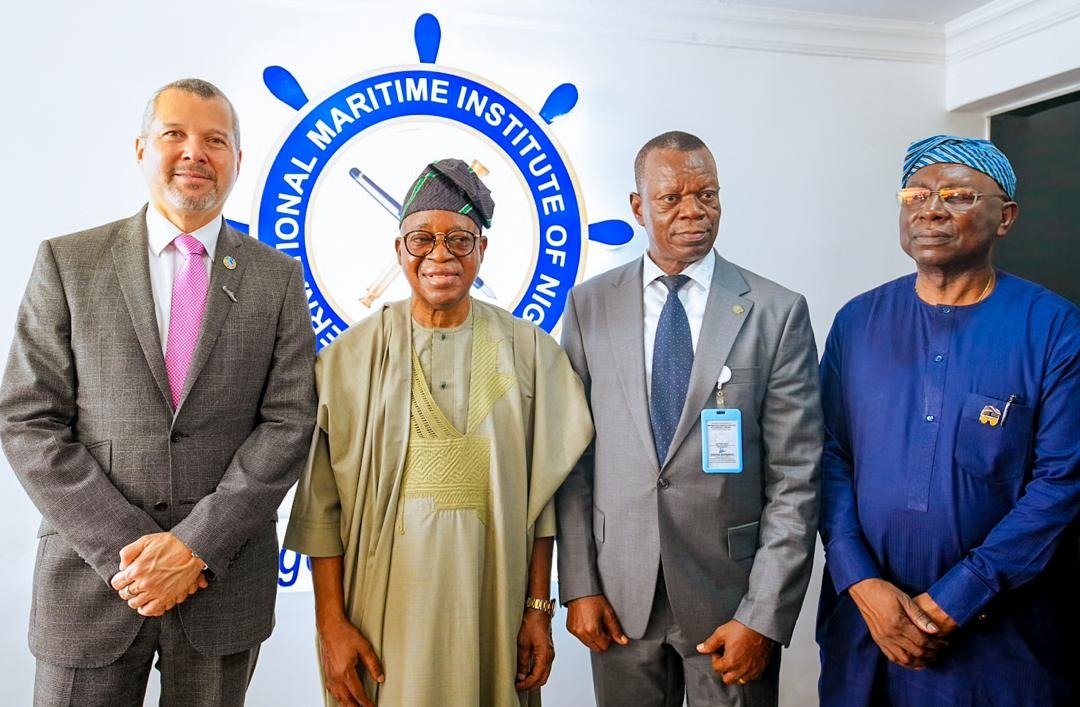
Speaking at the Institute of Maritime Studies, University of Lagos (UNILAG), during the official visit of the International Maritime Organization (IMO) Secretary-General, Arsenio Domínguez, Oyetola highlighted the vast opportunities inherent in the maritime sector. He said the Federal Government is committed to unlocking these opportunities through investments in infrastructure, manpower development, and international partnerships.
His words: “Nigeria’s future lies beyond oil. The marine and blue economy is a goldmine that can drive sustainable economic growth, create millions of jobs, and position our nation as a global maritime hub. We are determined to harness its full potential to become the primary driver of our economy.”
Oyetola who graduated from UNILAG enjoined Nigerian youths to take advantage of the numerous career and investment prospects within the sector.
He maintained that government’s vision for the blue economy requires a new generation of skilled professionals who will drive innovation and competitiveness.
Continuing, he said: “There are abundant opportunities for our young people in shipping, logistics, fisheries, shipbuilding, marine research, and offshore energy. I encourage you to be bold, innovative, and diligent. The future of this sector, and indeed the future of Nigeria’s economy, rests on your shoulders.”
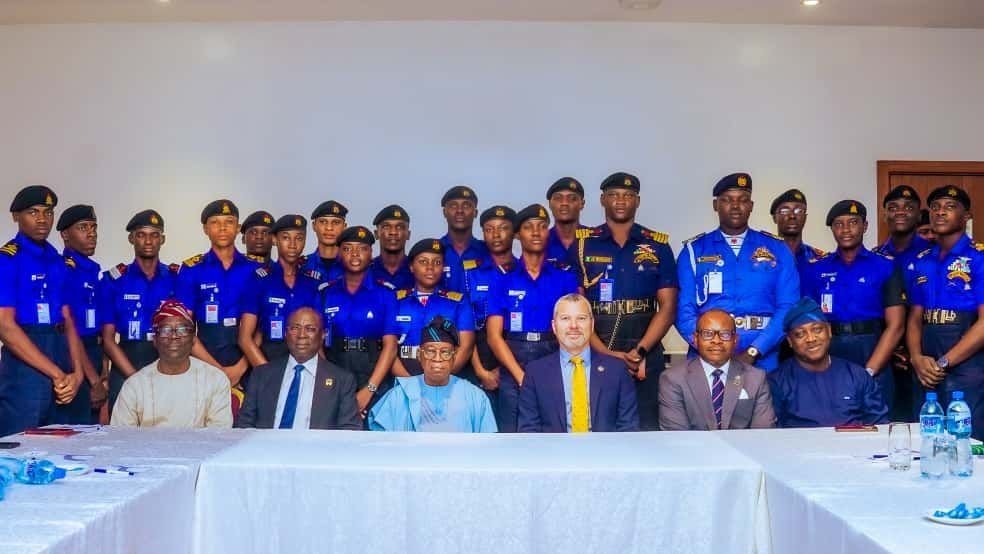
The minister commended UNILAG and the Nigerian Maritime Administration and Safety Agency (NIMASA) for their collaboration in maritime manpower development, particularly the establishment of a modern facility for the Institute of Maritime Studies.
He reaffirmed that the Federal Government’s marine and blue economy agenda is anchored on sustainability, innovation, and inclusivity, stressing that youth engagement and capacity building are central to achieving the long-term vision.
Meanwhile, Domínguez has taken a tour of major maritime formations in Lagos, underscoring the country’s pivotal role in global maritime security and manpower development.
Domínguez, who arrived in Nigeria on Thursday had earlier met with Oyetola and heads of key maritime agencies, followed by a courtesy call on President Bola Ahmed Tinubu at his Lagos residence.
A statement signed by the Special Adviser, Media and Communications to the Honourable Minister of Marine and Blue Economy, Dr. Bolaji Akinola said the IMO Secretary General in the company of Oyetola, visited the Nigerian Navy’s hydrographic research vessel, NNS Lana, stationed in Apapa.
According to the statement which was made available to Maritime Bits, the IMO Secretary General was warmly received by the Flag Officer Commanding, Western Naval Command, Rear Admiral Gregory Oamen, and the Commanding Officer of NNS Lana, Captain O.S. Giwa, who briefed him on the vessel’s operations and contributions to Nigeria’s maritime domain awareness.
Commissioned in 2021, NNS Lana is a state-of-the-art hydrographic vessel designed to conduct oceanographic and charting surveys within Nigerian and international waters.
The ship plays a critical role in enhancing navigational safety, supporting maritime research, and providing vital data for oil and gas exploration.
Apparently pleased by what he saw, Domínguez commended the Navy’s investment in modern hydrographic capability, noting that such infrastructure strengthens maritime safety and international trade.
The IMO Secretary-General also visited two critical facilities of the Nigerian Maritime Administration and Safety Agency (NIMASA) in Kirikiri, Apapa—the C4i Centre and the Regional Maritime Rescue Coordination Centre (RMRCC).
The C4i Centre, a cornerstone of Nigeria’s Deep Blue Project, integrates advanced technologies in command, control, communication, computer, and intelligence operations.
It serves as a hub for maritime surveillance, intelligence gathering, and rapid response coordination. Since its establishment, the centre has significantly contributed to reducing piracy incidents in the Gulf of Guinea, fostering greater safety for international shipping