
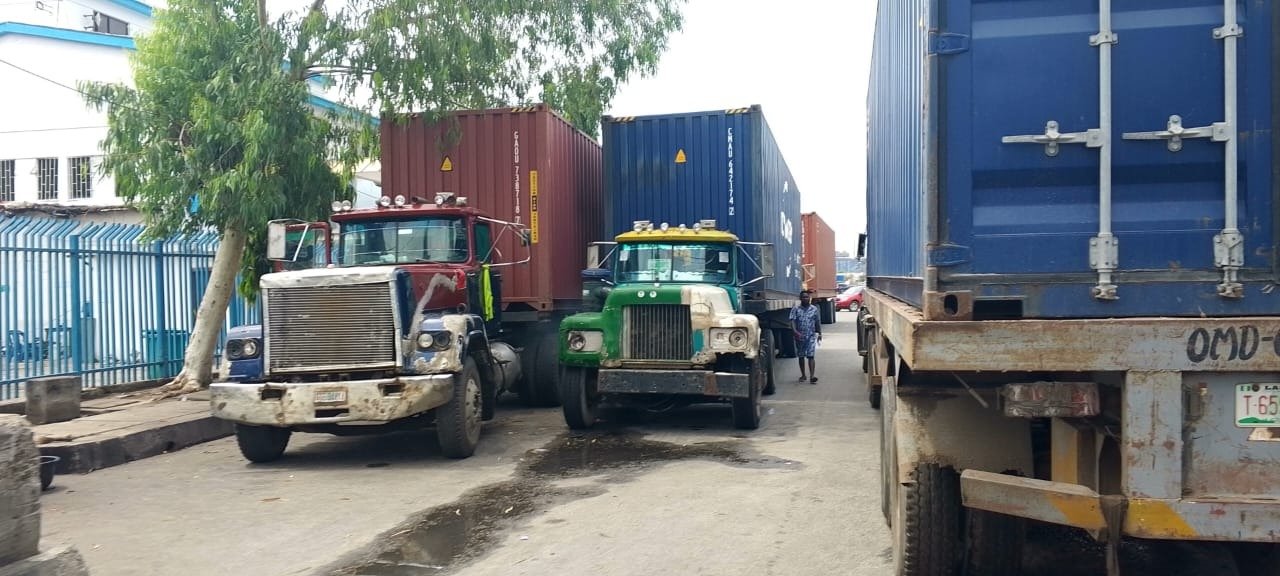
The notorious traffic gridlock that once crippled Nigeria’s port city, Apapa and its environs is gradually resurfacing, threatening to paralyze movement and port operations once again.
Despite previous interventions, residents, commuters, and port workers are now facing renewed evening congestion as truckers and tankers swarm the port access roads daily.
Findings by the Network of Nigerian Journalists (NNJ) reveal that while Apapa roads remain relatively free during the day, a long trail of trucks begins forming by evening from both the Costain and Mile 2 entry points.
From the Ijura-Olopa Bridge to Apapa and from Coconut Bus Stop to Tin Can Island’s gates, trucks line up in droves, allegedly paying between N30,000 and N50,000 to secure a spot in the queue.
Maritime Bits checks revealed that some officials of key government agencies including the Nigerian Ports Authority (NPA), Nigerian Shippers Council (NSC), Lagos State Traffic Management Authority (LASTMA), Federal Road Safety Corps (FRSC), and the Nigeria Police Force (NPF) are complicit in the illegal toll collection, turning a blind eye as the situation worsens.
The most affected areas include Wharf Road, Warehouse Road, Commercial Road, Burma Road, and Creek Road.
By 5pm, vehicle owners often abandon their cars and resort to motorcycles to escape the gridlock out of the affected areas before the close of work.
Apparently alarmed by the development, the former National Coordinator, Port Standing Task Team (PSTT), Mr. Moses Fadipe stated that the resurgence of the Apapa gridlock was due to vested interests who previously profited from the chaos. Fadipe averred that the Lagos State Government knows what steps to take to prevent a full-blown crisis.
On his part, President of the Nigerian Institute of Shipping (NIS) and the Nigerian Licensed Ship Chandlers Association (NILSCA), Mr. Martins Enibeli blamed government insincerity for the relapse.
He enjoined the authorities to prioritise rail transport for cargo evacuation from Lagos ports and to revive Eastern and Delta ports to ease pressure on Apapa.
His words: “Bonded terminals should be relocated far from the ports and connected by rail. Government must stop concentrating port operations in the West while neglecting other regions.”
Another top government official who preferred anonymity confirmed that a syndicate involving both state and non-state actors is profiting from the tolls collected from truckers, exacerbating the traffic crisis.
In order to avert the issue from escalating, not a few stakeholders in the maritime industry have called on the Federal Government to move in swiftly and dismantle the alleged racketeering network.
They averred that this was the only way to restore sanity to Apapa’s transport corridors in the weeks ahead, especially now that the Yuletide was fast approaching.