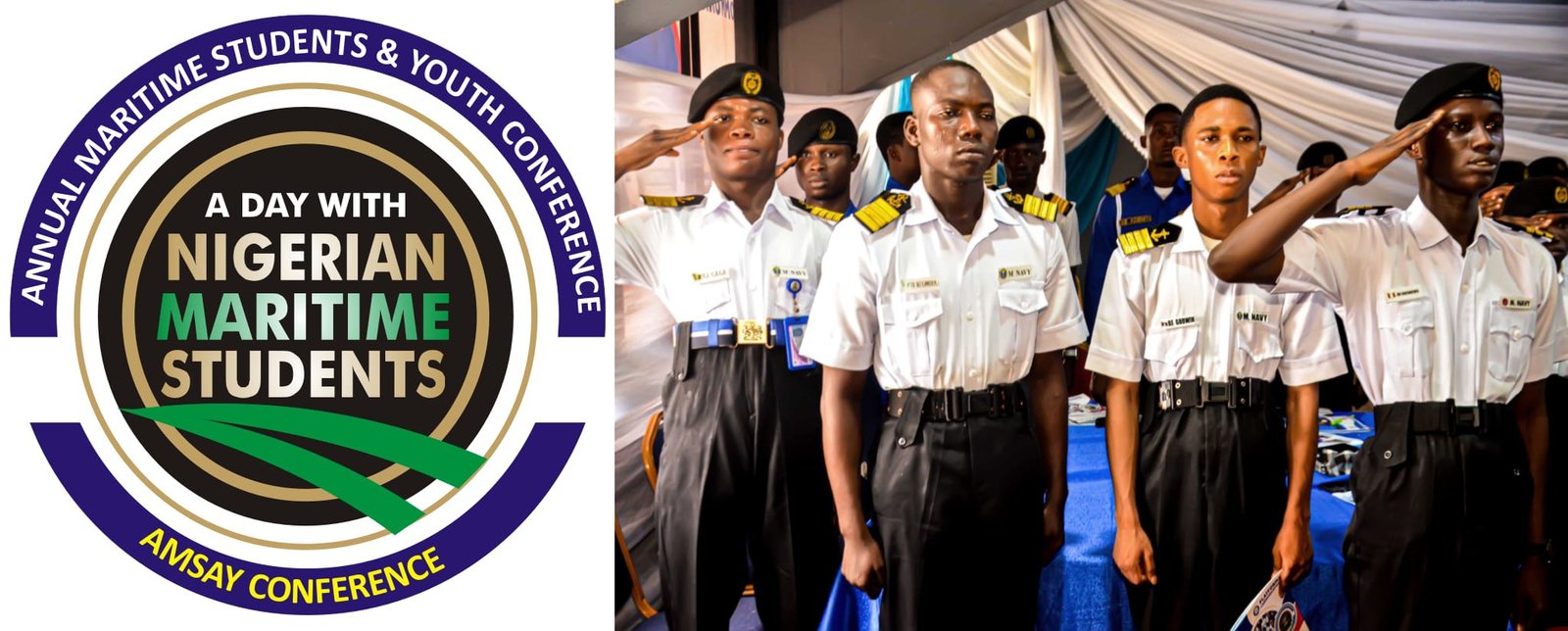
Ten years after it started, the Annual Maritime Students and Youth Conference (AMSAY) also known as ‘A Day with Nigerian Maritime Students’ is still kicking.
Besides the fact that it has remained a rallying point for dialogue, policy advocacy and youth-driven engagements in Nigeria’s maritime space, not a few persons have opined that it is steadily shaping conversations around reforms, capacity building and growth in the maritime sector of the economy.
A statement by the organisers said from its inaugural theme in 2016, “The Youth and The Future of Nigerian Maritime Sector,” the conference set the tone by drawing attention to the critical role young professionals and cadets must play in repositioning the industry for sustainable development.
According to it, the 2017 edition focus shifted to policy direction and institutional responsibility with the theme, “Solving the Challenges of Nigerian Maritime Students: The NIMASA Game Plan.” The conversation spotlighted the intervention strategies of the Nigerian Maritime Administration and Safety Agency (NIMASA), particularly in training, sea-time opportunities, and capacity development.
By 2018, the discourse expanded to global competitiveness under the theme, “Repositioning Nigerian Maritime Academies and Students for New Opportunities and Technologies in Global Maritime Operations.” The conference emphasized modern curriculum, digital skills and international best practices to align Nigerian institutions with global standards.
The following year, the conference challenged conventional thinking with the theme, “Beyond Sea Time.” Stakeholders examined alternative career pathways in maritime law, logistics, marine insurance, port management and offshore services, encouraging diversification beyond traditional seafaring roles.
After the disruptions of the COVID-19 era in 2020, the 2021 edition focused on “Attaining Global Maritime Competence.” Discussions centred on certification standards, compliance with international conventions and the need for Nigerian seafarers to compete favourably in the global labour market.
In 2022, the conference brought socioeconomic impact to the fore with the theme, “Job Creation for Nigerian Youths through Maritime Sector.” Participants explored how shipping, port operations, inland waterways and blue economy initiatives could unlock employment opportunities across value chains.
Environmental sustainability took centre stage in 2023 with a theme, “Towards Attaining Greener Shipping In Nigeria.” The conference examined decarbonisation, cleaner fuels and regulatory compliance in line with global environmental standards set by bodies such as the International Maritime Organization (IMO).
In 2024, attention returned to human capital development with the theme, “Solving the Challenges of Nigerian Maritime Students and Cadets.” Stakeholders revisited persistent concerns around sea-time placement, funding, welfare and structured mentorship for cadets.
The following year, its focus was on “Automation and Digitalisation of Maritime Operations.” Conversations revolved around smart ports, artificial intelligence, blockchain in shipping documentation and the need to prepare Nigerian professionals for technology-driven maritime ecosystems.
As AMSAY Conference marks its 10th anniversary this year, a fitting theme to celebrate the milestone needs to be diligently chosen and aptly worded.
Such a theme should encapsulate the conference’s journey—youth empowerment, policy advocacy, technological advancement, job creation and environmental responsibility—while setting a bold agenda for the next decade of transformation in Nigeria’s maritime sector.