
The Provisional Committee of the proposed Nigerian Coast Guard (PC-NCG) has said the tragic boat incident in Bayelsa State last Friday has once again raised painful but necessary questions about the safety of Nigeria’s inland waterways.
The PC-NCG cited concerns over enforcement of passenger safety regulations, vessel seaworthiness, overloading, availability and proper use of life jackets, emergency response capacity, and accountability for preventable maritime accidents.
In a statement issued in Abuja and signed by its Director of Communications and Public Affairs, Dr. Piriye Kiyaramo, it extended heartfelt condolences to the bereaved families, the affected communities, and the Government and people of Bayelsa State.
The statement which was issued on behalf of PC-NCG Chief Executive and Accounting Officer, Captain Noah Omonu Ichaba prayed for the repose of the souls of the departed, strength and comfort for their families, and speedy recovery for those injured, stressing that Nigeria must confront enforcement, overloading, vessel seaworthiness and emergency response – not just mourn.
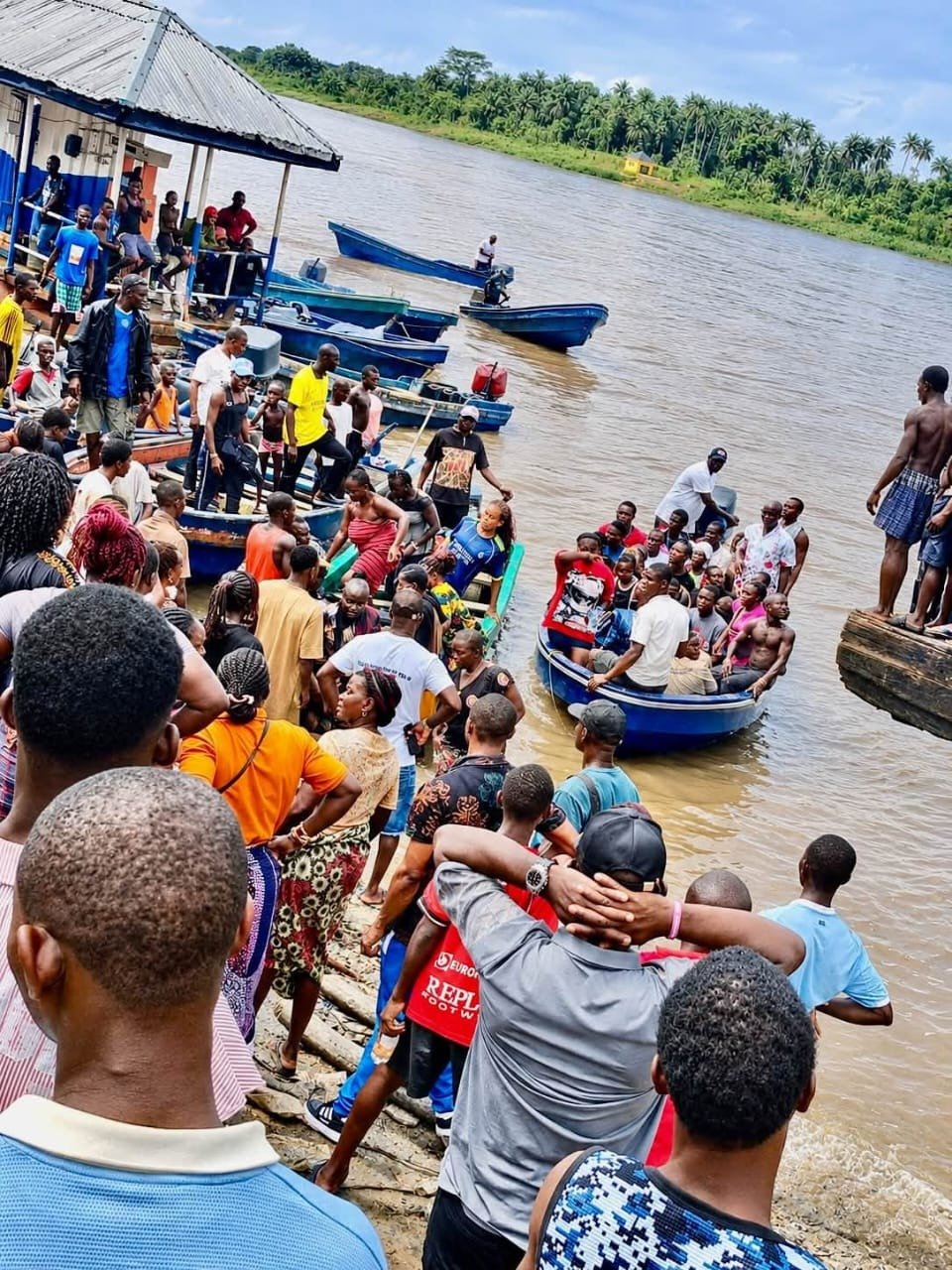
The Nigeria Police Force (NPF) had in its report said the accident occurred at about 11 a.m. on Friday at the river junction between Oweikorogha and Otuan communities along the River Nun in Southern Ijaw Local Government Area of Bayelsa State.
The boat was travelling from Ayama community to Ukubie for a burial ceremony when it capsized. Four lives were reportedly lost, including two children, while 24 survivors were rescued.
Continuing, the Police said the vessel developed a mechanical problem, while survivors reportedly raised concerns about overcrowding before it capsized.
The PC-NCG commended NPF marine personnel, local divers, community responders, medical personnel and others involved in the rescue and recovery efforts.
It however expressed regret over the incident, saying: “Every life lost on our waterways is a painful reminder that maritime safety must never be treated as an afterthought.”
According to it, the Bayelsa tragedy is not an isolated incident. Reported figures for 2026 show a recurring national crisis. Media reviews found fatalities from major boat mishaps rose by about 63% in the first half of 2026 compared to the same period in 2025, while another review counted no fewer than 70 boat accidents in Nigeria in 2026.
At least 117 Nigerians died in just three incidents in Yobe, Jigawa and Sokoto States between January and August 2026 alone. Between 2022 and 2025, at least 972 persons lost their lives in reported boat accidents in Nigeria.
Figures vary across police, NEMA, NIWA and media reports due to the fact there is no manifest of passengers. The pattern, however, is consistent.
It stressed the need for thorough investigation beyond the immediate tragedy, pointing out that where passengers reportedly raised concerns about overcrowding and a mechanical problem before the vessel capsized, such allegations must be thoroughly investigated and appropriate responsibility established.
According to PC-NCG, safety warnings are not enough. Nigeria cannot continue to mourn waterway tragedies without confronting the institutional, regulatory, operational and enforcement gaps that make our waterways unsafe.
Its words: “Safety warnings alone are not enough. Regulations must be enforced; vessels must be fit for purpose; operators must be accountable; passengers must be protected; and emergency response must be coordinated, accessible and effective. The PC-NCG believes the tragedy further underscores the imperative for a coherent, adequately empowered and properly coordinated national civil maritime governance and civil maritime law enforcement framework.
“The responsibilities are already there. The waterways are already there. The risks are already there. The personnel, public resources and institutional activities are already there. The fundamental national question is whether these responsibilities are sufficiently coordinated, integrated and accountable within a coherent institutional framework capable of protecting lives and safeguarding our maritime environment.
“This is one of the compelling public-interest considerations underlying the proposed Nigerian Coast Guard and the ongoing legislative consideration of Senate Bill 575. The Bill should not be viewed merely as a question of creating another institution, but as an opportunity to examine how Nigeria can strengthen civil maritime safety, security, protection, enforcement, emergency response, institutional coordination and accountability in the overall public interest.”
Stressing the need for action, the PC-NCG enjoined all relevant authorities to ensure the investigation is thorough, transparent and conclusive; that any culpable negligence or violation of safety regulations is addressed in accordance with the law; and that immediate, practical measures are taken to prevent similar tragedies across Nigeria’s inland waterways.
“Every passenger who boards a vessel deserves to return alive. Every child travelling on our waterways deserves protection. Every family deserves the assurance that water transportation is not a gamble with human life.”
“The loss of these lives must not become another statistic, another news headline that fades with time, or another tragedy followed by warnings that are never translated into lasting action. May the lives lost in Bayelsa not be lost in vain”, it added.
It maintained that no blue economy without blue security, blue justice, blue knowledge and blue reward.