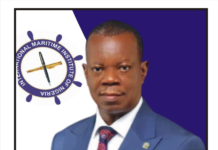


By Eugene Nweke
The Sea Empowerment & Research Center (SEREC) commends the Comptroller-General of Customs, Bashir Adewale Adeniyi, MFR, and the management of the Nigeria Customs Service (NCS) for the service sustained vigilance, intelligence-led interventions and remarkable interceptions of prohibited and dangerous consignments across Nigeria’s ports, land borders and other points of entry.
SEREC considers these interventions worthy of public commendation, not merely because they represent successful Customs enforcement, but because they increasingly constitute a critical first line of defence in Nigeria’s national-security architecture.
Pattern Should No Longer Be Treated As Routine Customs Enforcement
It is increasingly difficult to regard the recurring interception of arms and ammunition, weapons, illicit drugs, prohibited goods, unreported currency and other sensitive consignments as isolated incidents of smuggling.
The frequency and nature of these interceptions suggest that Nigeria’s extensive maritime and land-frontier networks are being persistently tested and exploited by transnational criminal syndicates, arms traffickers, drug cartels, organised smuggling networks and potentially terrorist-linked interests seeking to penetrate, transit or establish supply channels through the country’s legitimate trade infrastructure.
This development demands a fundamental shift in national consciousness. A seized container is not merely a Customs seizure. A prohibited weapon intercepted at a port is potentially a weapon denied to a criminal, terrorist or violent extremist network. A narcotics consignment stopped at the border represents the disruption of a criminal supply chain.
The implication is therefore profound: Nigeria’s ports, borders and trade corridors are no longer only economic gateways; they are also strategic national-security frontiers.
A National Security Wake-Up Call
SEREC therefore uses this opportunity not only to commend the NCS but to issue a strong wake-up call to the Federal Government and all relevant security and regulatory institutions.
The recurring interceptions should trigger deeper national-security assessment, intelligence coordination and preventive action.
Nigeria cannot afford to wait until illicit arms, ammunition, narcotics, terrorist logistics and criminal finances have successfully penetrated the country before responding.
The activities and expansionist tendencies of banditry, terrorist and violent extremist organisations and other transnational criminal networks operating within and around the West African sub-region must be proactively contained.
This concern becomes even more compelling as the nation gradually moves towards the 2027 general electioneering period.
Election periods can create additional vulnerabilities through heightened political activity, increased movement of people and goods, illicit financing, proliferation of small arms and light weapons, communal tensions and attempts by criminal elements to exploit political instability.
SEREC therefore urges the Federal Government to intensify intelligence gathering, border surveillance, inter-agency coordination and preventive security measures well ahead of the 2027 electoral cycle, rather than adopting a reactive posture after threats have materialised.
The objective must be clear: Nigeria’s ports, borders and critical trade corridors must not become supply channels, logistics platforms or financial conduits for terrorism, banditry, organised crime or election-related violence.
Government Must Back Intelligence-Led Customs Enforcement
SEREC particularly commends the increasing emphasis of NCS on intelligence gathering, risk profiling, targeted intervention, information analysis and inter-agency collaboration. This is the direction modern Customs administration must take.
Contemporary smuggling is no longer principally about individuals carrying contraband across poorly guarded borders. Sophisticated criminal enterprises increasingly employ complex supply chains, false documentation, front companies, concealment techniques, multiple transit routes, trade-based financial mechanisms and legitimate commercial actors to disguise illicit operations. The response must therefore equally be sophisticated.
SEREC calls for stronger government investment in advanced Customs intelligence and risk-management systems; real-time and secure inter-agency information sharing; advance cargo and pre-arrival information analysis; non-intrusive inspection and detection technologies; maritime and land-border surveillance; data analytics and intelligence fusion; international and regional Customs/security cooperation; specialised training for Customs intelligence personnel; and improved logistics, welfare and operational support for officers deployed to sensitive locations.
Freight Forwarders, Customs Brokers and Bonded Operators Must Be Part of the Security Architecture
SEREC also considers it imperative that the Government and relevant regulatory institutions broaden the national security conversation beyond Customs and conventional security agencies.
Freight forwarders, Customs brokers, licensed bonded terminal operators, shipping and logistics companies and other legitimate trade-chain participants must be deliberately integrated into the national border-security and trade-compliance framework.
These professionals occupy strategic positions within the supply chain. They often possess information about consignors, consignees, cargo descriptions, documentation, routing, cargo movement and delivery arrangements that may be valuable to enforcement authorities. Yet, there is a troubling dual vulnerability.
On the one hand, some legitimate operators may be unknowingly exploited or manipulated as conduits for criminal activities because of inadequate awareness, weak due diligence or insufficient understanding of emerging smuggling techniques.
On the other hand, it must also be acknowledged without equivocation that there are instances where unscrupulous industry actors knowingly facilitate, participate in or profit from illicit trade. Both dimensions require attention.
SEREC therefore advocates a comprehensive Port and Border Trade-Security Enlightenment and Compliance Programme involving Customs brokers, freight forwarders, licensed bonded operators and other relevant supply-chain stakeholders. Such a programme should cover:
- Identification of suspicious consignments and trade patterns;
- Know-Your-Customer and Know-Your-Consignor principles;
- Document and cargo-risk indicators;
- Recognition of concealment and diversion techniques;
- Reporting channels for suspicious transactions and activities;
- Legal consequences of facilitating prohibited trade;
- Cyber and documentary fraud awareness;
- Illicit financial-flow and money-laundering red flags;
- Responsibilities under national Customs and security laws; and
- Protection of legitimate operators from being inadvertently used by criminal networks.
The objective should not be to criminalise the entire freight-forwarding and Customs-brokerage profession. Rather, it should be to professionalise, educate, sensitise and empower the legitimate trade community to become an additional layer of vigilance within Nigeria’s supply-chain security architecture.
From Compliance to Co-Responsibility
SEREC believes Nigeria needs to move from the traditional concept of “Customs versus smugglers” to a broader national framework of shared responsibility for secure and legitimate trade. Government agencies cannot see everything.
Customs officers cannot be physically present at every stage of a cargo transaction. Security agencies cannot independently monitor every trade document, consignee, consignor, warehouse, bonded facility and logistics movement. The private sector therefore has an important role to play.
The freight-forwarding and logistics community should be encouraged to see intelligence reporting and compliance not as an intrusion into their business but as part of their professional and patriotic responsibility.
At the same time, enforcement agencies must ensure that intelligence received from industry stakeholders is treated professionally, confidentially and without harassment of legitimate businesses.
Trade Facilitation and National Security Must Move Together
SEREC reiterates that stronger border security must not translate into indiscriminate cargo intervention or unnecessary delays for compliant traders.
The ideal model is a secure border and facilitated trade environment, where compliant, low-risk cargo moves efficiently while credible intelligence triggers targeted intervention against high-risk consignments.
This is where modern Customs administration, technology, intelligence and professional supply-chain participation become indispensable.
SEREC Position
The Sea Empowerment & Research Center therefore:
- Commends the Comptroller-General of Customs and the management of the NCS for sustained intelligence-led interventions and significant seizures across Nigeria’s ports and frontiers.
- Urges the Federal Government to recognise the increasing security significance of Nigeria’s ports, borders and trade corridors and provide the NCS and other relevant agencies with the necessary resources, technology and institutional support.
- Calls for stronger intelligence fusion and real-time information sharing among Customs, the Nigerian Navy, NIMASA, Nigeria Police Force, immigration authorities, financial-intelligence institutions and other relevant security and regulatory agencies, within the framework of applicable laws.
- Urges heightened surveillance of maritime and land-frontier routes susceptible to exploitation by terrorist organisations, bandit networks, arms traffickers, drug cartels and transnational organised crime.
- Calls for proactive security planning ahead of the 2027 electioneering period to prevent the movement of illicit arms, narcotics, criminal finances and other dangerous materials through Nigeria’s trade corridors.
- Advocates a structured national enlightenment and professional training programme for freight forwarders, Customs brokers, licensed bonded operators and other supply-chain stakeholders to enable them identify, resist and report attempts by criminal networks to exploit their legitimate businesses.
- Calls for firm enforcement against industry actors who knowingly facilitate criminal trade, while protecting legitimate professionals who may have been innocently or unknowingly exploited by criminal networks.
- Encourages the NCS to sustain its transition towards intelligence-driven, technology-enabled, risk-based and professionally targeted enforcement, while maintaining transparency, accountability and respect for legitimate trade.
Conclusion
SEREC considers the recurring seizures by the NCS to be both a commendable demonstration of operational vigilance and a warning that should not be ignored by the nation. The message from these interceptions is clear: criminal networks are constantly probing the vulnerabilities of Nigeria’s borders and legitimate trade channels. Nigeria must therefore not wait for a catastrophic incident before strengthening its defences.
The protection of the nation’s ports and frontiers is no longer solely a Customs responsibility. It is a collective national-security responsibility involving government, security agencies, Customs, the maritime industry, freight forwarders, Customs brokers, bonded operators, financial institutions and the wider trading community.
SEREC consequently commends the present leadership of the NCS for its interventionist alertness and calls for greater governmental backing, stronger inter-agency intelligence cooperation, enhanced technology and a more security-conscious trade community.
As Nigeria approaches another critical electoral cycle, the nation must remain vigilant. Our ports must remain gateways to legitimate commerce—not gateways for terrorism, banditry, organised crime, illicit arms, narcotics or other threats to national stability. The time to strengthen the gate is before the threat enters—not after the damage is done.
*Eugene Nweke, a registered freight forwarder (RFF) and Head of Research, Sea Empowerment and Research Center (SEREC) writes from Lagos.