

The Nigeria Customs Service (NCS) has given reasons why it launched a new digital platform called One-Stop-Shop (OSS).
Besides cutting down on cargo clearance delays, it also aimed at eliminating bureaucratic bottlenecks usually associated with Nigeria’s seaports.
It averred that OSS will significantly reducing cargo clearance time in the nation’s seaports to 48 hours.
The NCS in a statement made available to Maritime Bits quoted the Comptroller-General of Customs, Dr. Bashir Adewale Adeniyi describing the initiative as a major structural reform designed to modernise border operations and strengthen Nigeria’s trade competitiveness.
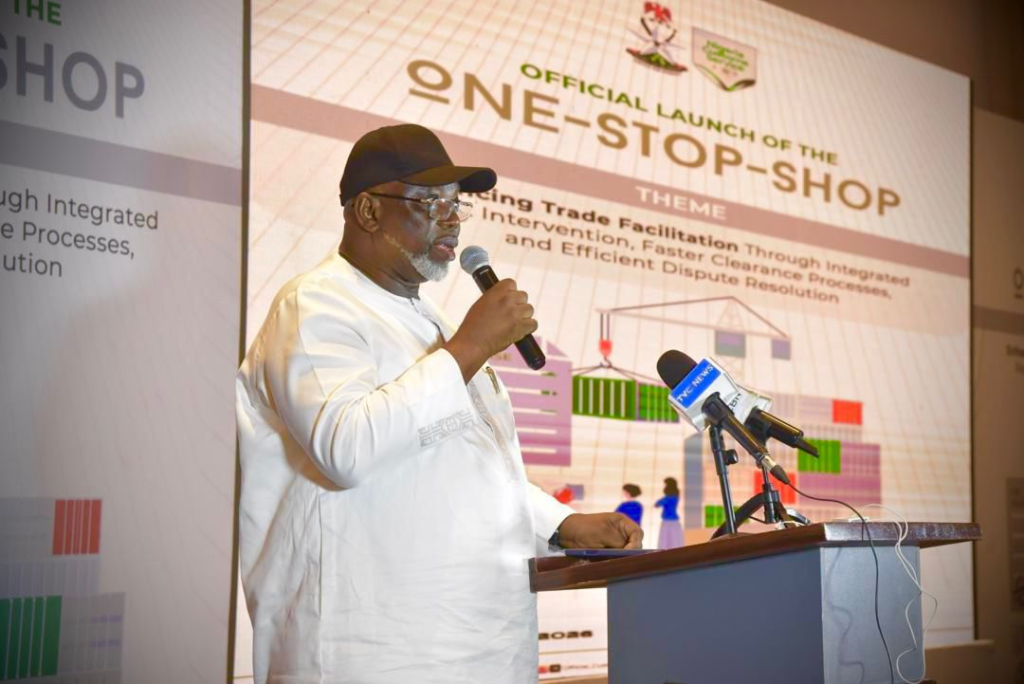
Adeniyi was said to have sated this at the formal launching of the platform in a ceremony which took place in Lagos recently.
He noted that the platform aligns with Nigeria’s broader business reforms under the administration of President Bola Tinubu as well as global standards under the World Trade Organisation (WTO) Trade Facilitation Agreement which estimates that efficient border reforms can cut trade costs in developing economies by over 14 percent.
The NCS boss also announced that the service is advancing toward a fully paperless customs environment, with the first phase of digital clearance and documentation processes scheduled for rollout by the end of the second quarter of 2026.
Adeniyi’s words: “This platform is a deliberate shift from fragmented interventions to co-ordinated governance, from discretion to data, and from isolated actions to collective responsibility. Through this reform, we continue to build systems that support lawful trade, protect national interests, and serve the economy with professionalism and integrity.”
The Deputy Comptroller-General of Customs, Tariff and Trade, Caroline Niagwan in her remarks said the OSS platform consolidates all risk interventions into a single electronic interface, streamlining multiple checks into a single digital umbrella.
“Today, the NCS is introducing the One-Stop-Shop digital platform, an innovative system designed to consolidate all risk interventions at the port into a single electronic interface. We have listened to your feedback and recognised how multiple checkpoints and risk interventions affect business processes. Your involvement in this engagement is crucial to the success of this reform,” she said.
A technical presentation by NCS Trade Facilitation Unit outlined strategies to reduce clearance time from an average of 21 days to about 48 hours, along with implementation plans and anticipated challenges.
Many stakeholders at the engagement expressed strong support for the initiative, noting that the platform would facilitate legitimate trade.
In the same vein, an interactive session also provided clarifications on operational procedures and expectations for the OSS rollout.