
More than two decades of going forth and back on the full and strict implementation of the purpose for which it was established, the Federal Government has finally unveiled the Cabotage Vessel Financing Fund (CVFF) Application Portal.
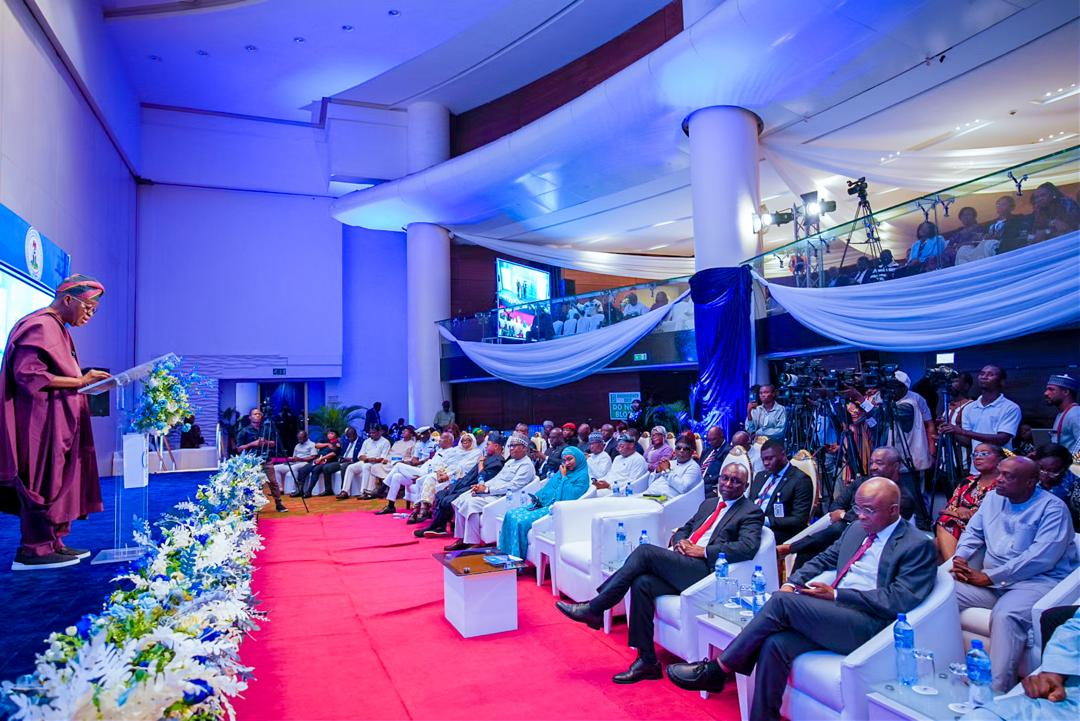
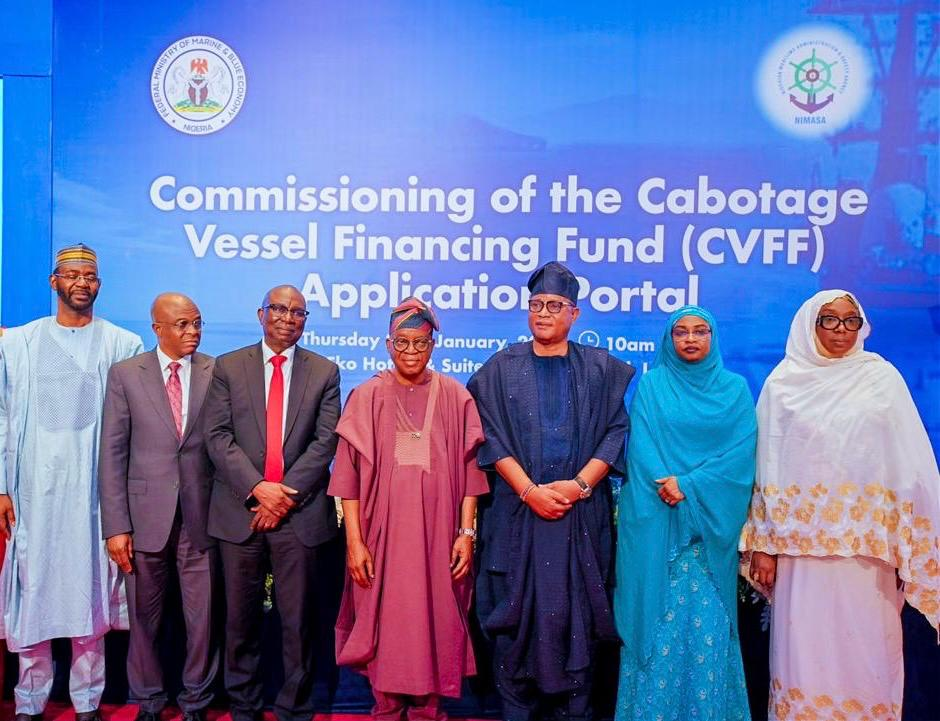
The formal unveiling of the portal in Lagos Thursday which drew senior government officials, maritime industry leaders, legislators and key stakeholders in the maritime sector of the economy and beyond, marked a historic step in Nigeria’s long-awaited journey to operationalise structured financing for indigenous ship ownership.
While declaring the portal open, the Minister of Marine and Blue Economy, Dr. Adegboyega Oyetola described the occasion as “a deliberate and strategic step in repositioning Nigeria’s maritime sector as a central pillar of national development.”
He noted that the launching aligned with the broader national objective of diversifying the economy and unlocking what he called “the vast potential of Nigeria’s maritime domain, coastal resources and inland waterways.”
Oyetola’s words: “The maritime sector remains the backbone of global commerce, yet despite Nigeria’s strategic geographic location and vibrant entrepreneurial base, our participation in coastal and inland trade has remained limited. A major constraint has been the absence of a functional, credible, and transparent financing framework to support indigenous ship ownership. Today, we are changing that narrative.”
The Special Adviser to the Minister, Dr. Bolaji Akinola in a statement quoted Oyetola saying that CVFF established under the Coastal and Inland Shipping (Cabotage) Act of 2003 was designed to address the financing gap faced by Nigerian ship owners.
According to the statement which was made available to Maritime Bits, the Minister acknowledged that institutional and structural considerations over the years delayed its operationalisation.
He stated that upon assuming office, his Ministry adopted a clear policy objective to strengthen Nigeria’s maritime capacity and ensure that the CVFF is implemented strictly in line with sound governance and financial principles.
“The CVFF is structured as a strategic development instrument. By facilitating access to competitive vessel financing for indigenous operators, we hope to reduce reliance on foreign-flagged vessels in our coastal trade, improve retention of value within the domestic economy, create employment opportunities for Nigerian seafarers, and stimulate growth in allied sectors such as shipbuilding, ship repair, and maritime services.”
He also emphasised that CVFF impact extends beyond economics, noting that a stronger indigenous fleet would enhance maritime safety and security while supporting national efforts to maintain a regulated and efficient maritime domain.
Stressing accountability, he reminded potential beneficiaries that the CVFF is a revolving fund that must be prudently utilised and repaid to ensure sustainability for future generations of maritime entrepreneurs.
Oyetola who was the former governor of Osun State explained that the newly launched digital portal would serve as the institutional gateway for transparent administration of CVFF.
“Through this platform, eligible Nigerian ship owners can submit applications that will be assessed against clearly defined criteria, supported by robust due diligence and professional financial oversight through approved Primary Lending Institutions (PLI),” he said.
He added that the portal aligns with the Federal Government’s e-Government agenda and efforts to reduce bureaucratic bottlenecks and improve ease of doing business.
“By digitising the end-to-end CVFF application and evaluation process, we are simplifying access, improving predictability, and ensuring service delivery is efficient, transparent, and responsive. I am confident that this initiative will strengthen our shipping industry, empower Nigerian enterprise, and contribute meaningfully to national growth,” he said.
The Director General, Nigerian Maritime Administration and Safety Agency (NIMASA), Dr. Dayo Mobereola in his remarks reaffirmed the agency’s commitment to ensuring CVFF delivers on its purpose.
He disclosed that NIMASA has established a dedicated CVFF unit to drive implementation, manage applications, coordinate with financial institutions and ensure strict adherence to eligibility, compliance and risk management procedures.
“Our objective is to make the CVFF work as a practical and reliable financing window for Nigerian ship owners to acquire vessels at competitive long-term financing rates,” he said.
He assured that the agency will ensure professional handling of applications, continuous engagement with PLIs rigorous due diligence, and transparent monitoring of the entire process.
Mobereola said the agency is determined to build confidence in the system and ensure that every disbursement follows clear rules, measurable criteria and global best practice.
According to the statement, goodwill messages were delivered by the Chairman of the Senate Committee on Marine Transport, Senator Wasiu Eshinloku and the Chairman of the House Committee on Maritime Safety, Education and Administration, Hon. Khadija Bukar Abba Ibrahim.
In their remarks, the lawmakers commended Oyetola and NIMASA for what they described as a landmark achievement that responds to longstanding demands of the maritime community just as they pledged continued legislative support to ensure effective implementation of CVFF and sustained reforms in the sector.
Industry stakeholders also expressed strong support for the initiative as the President of the Nigerian Maritime Law Association, Mike Igbokwe (SAN); President of the Nigerian Chamber of Shipping, Mr. Aminu Umar; President of the Nigerian Ship Owners Association, Captain Sola Adewunmi; and the President of the Ship Owners Association of Nigeria (SOAN), Mr. Sonny Eja all praised Oyetola and NIMASA for their commitment to finally unlocking the CVFF.
They described the formal unveiling of the portal as a turning point for indigenous ship ownership, capacity development and investor confidence in Nigeria’s maritime sector.
Maritime Bits had reported that CVFF was established under the Coastal and Inland Shipping (Cabotage) Act of 2003 as a vital instrument to provide structured financing for Nigerian shipping companies to acquire vessels and participate meaningfully in domestic maritime trade.
For more than two decades, CVFF has remained largely inaccessible, leaving indigenous operators dependent on costly foreign financing or foreign-flagged vessels.
Oyetola had early last year directed NIMASA to commence the process of disbursing CVFF, signalling a firm commitment to actualising it for its original intent and unlocking its immense potentials for national economic growth.
Responding to this directive, NIMASA issued a Marine Notice inviting eligible Nigerian shipping companies to submit applications. Qualified applicants will have the opportunity to access up to USD 25 million each at competitive interest rates to acquire modern vessels that meet stringent international safety and performance standards. The Fund’s administration will be conducted in close collaboration with carefully vetted and approved PLIs ensuring a professional, efficient and accountable disbursement process.
With the unveiling of the CVFF Application Portal, stakeholders believe Nigeria has taken a long-awaited step towards building a robust indigenous fleet, retaining maritime value within the national economy and positioning the country as a stronger player in the global marine and blue economy.